
It is certainly a challenge developing and testing new ideas whilst keeping on top of the day job.
Over the course of 2025 we were developing a new AI tool to distinguish between a bird’s different vocalisations, thereby enabling us to better understand the bird’s behaviour and how they are making use of the habitat.
This tool has the potential to add an extra layer of ecological insights onto bioacoustics data, but we had to make time to properly test it before releasing it.
This opportunity was afforded to us by the BridgeAI’s AgriTech High Growth Accelerator, which ran in Autumn 2025.
BridgeAI High Growth Accelerator Overview
BridgeAI is an Innovate UK funded programme with the aim of helping commercialise new AI products in key UK industries. The logic being that AI will improve productivity in those key industries unlocking efficiency gains and economic growth.
The BridgeAI High Growth AgriTech Accelerator programme was a 14-week accelerator for UK SMEs with a focus on Agritech. There were several ‘challenges’ which were sponsored by an industrial or academic organisation. In our case we were invited to apply for the “Biodiversity and methane monitoring challenges”, sponsored by Hartpury College/University. There is much more on the collaboration below but in short we were able to openly discuss and test our new idea, whilst receiving regular feedback from experts with agricultural industry knowledge.
This is what prompted us to apply. We have lots of interesting ideas on how to move the field of bioacoustics forward, but finding the avenues to get those ideas finalised and tested can be tricky. Therefore once we had agreed internally that using the BridgeAI opportunity to focus on the bird call AI was the best use of our time we were keen to make the most of the experience.
The accelerator also enabled us to access a range of different resources mainly via webinars or 1:1s with a variety of specialists. The topics ranged from technical discussions on AI with industry experts to more ‘business hygiene’ topics to help keep things in order. As you would expect when faced with such a wide range of topics some were exceedingly useful, others were not as useful. Some we expected to be less useful and were very useful, and some were the opposite. See below for a more in depth review of the BridgeAI experience.
Hartpury Collaboration
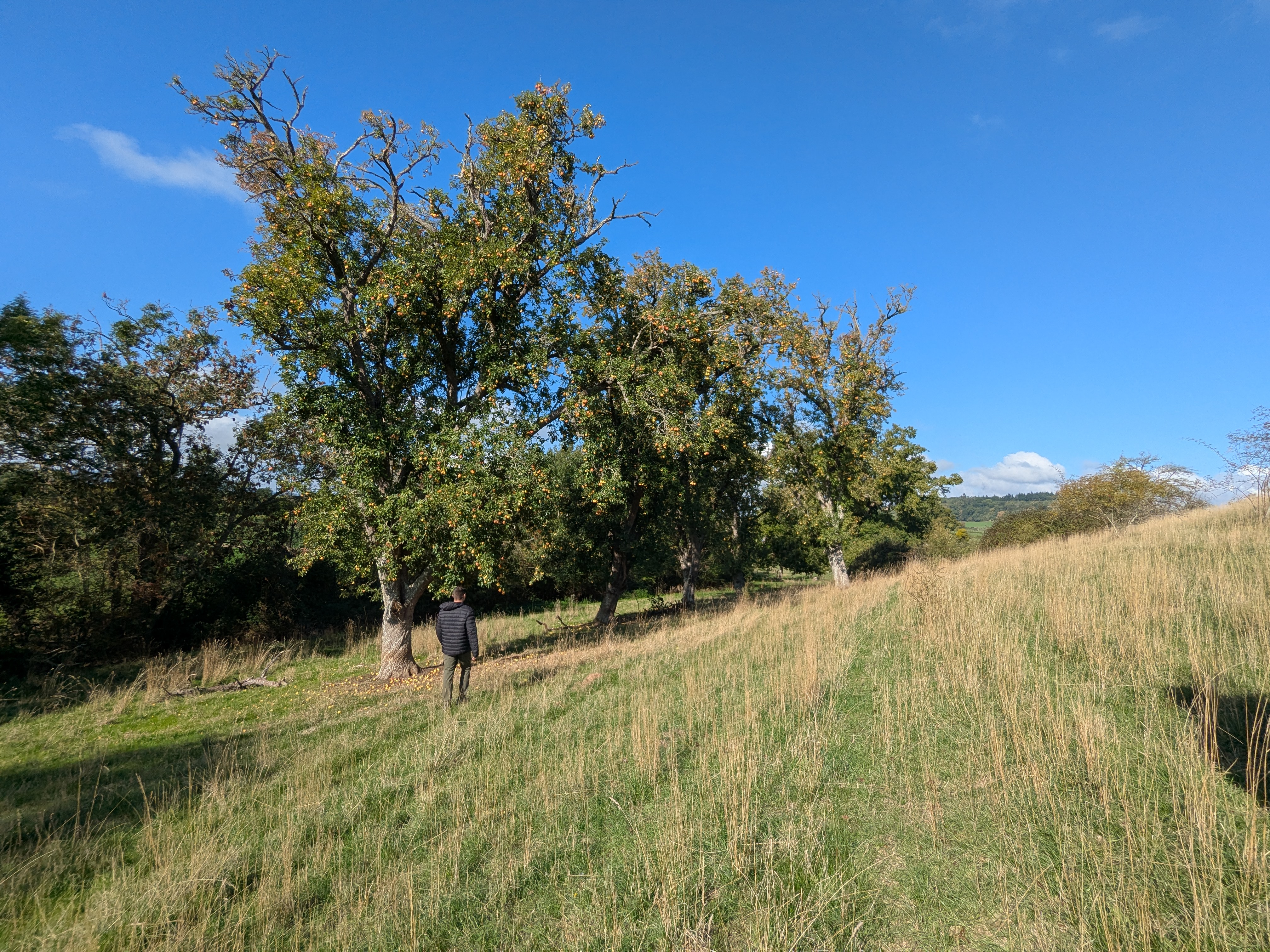
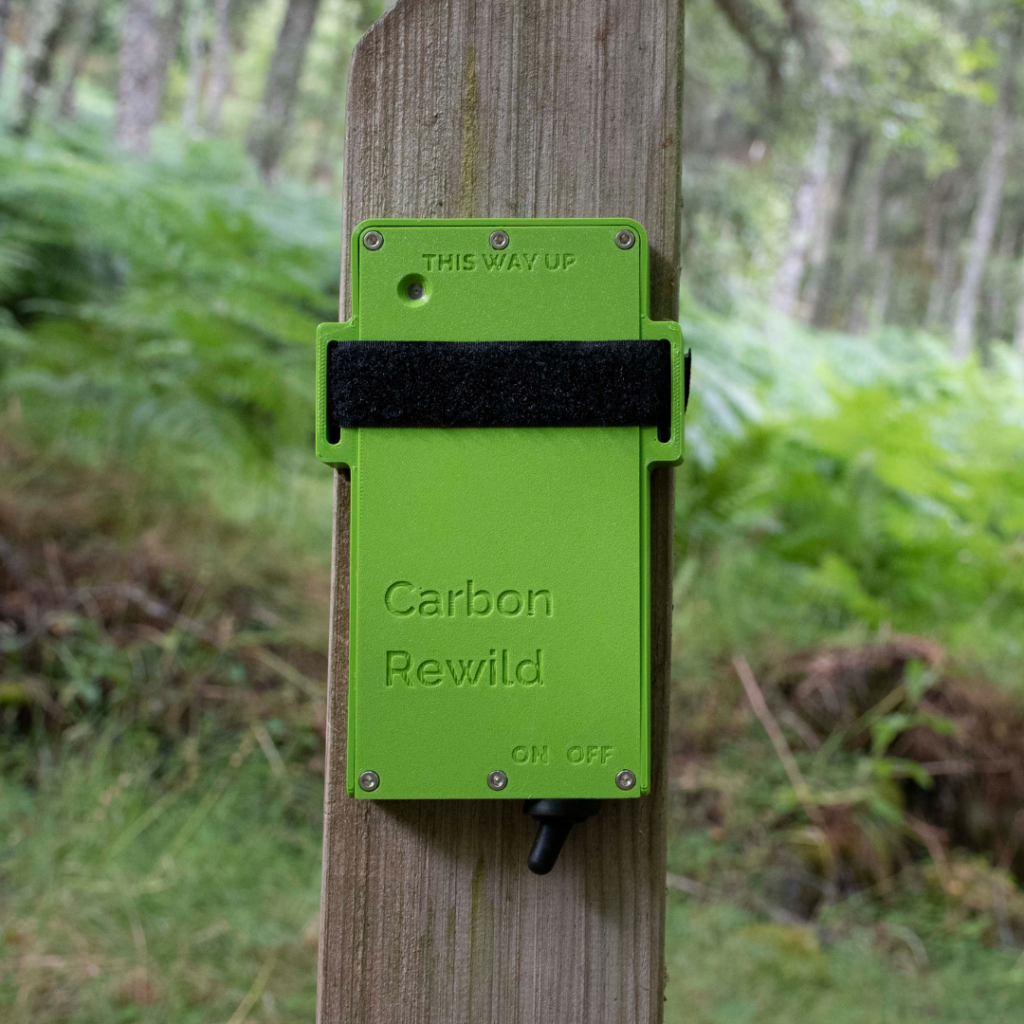
As part of the accelerator we held regular meetings with two academics at the Hartpury Digital Innovation Farm, Dr Lucy Garrett and Professor Matt Bell. This also included visiting the Hartpury site in early Autumn to set up some bioacoustics recorders and gather data from the farm, as well as being able to demonstrate our process in person. Unfortunately September is not the best month for recording different bird calls of a given species as the proportion of songs is much reduced – birds very much still call though (and we are always pleasantly surprised how many species you can pick up based on their calls alone).
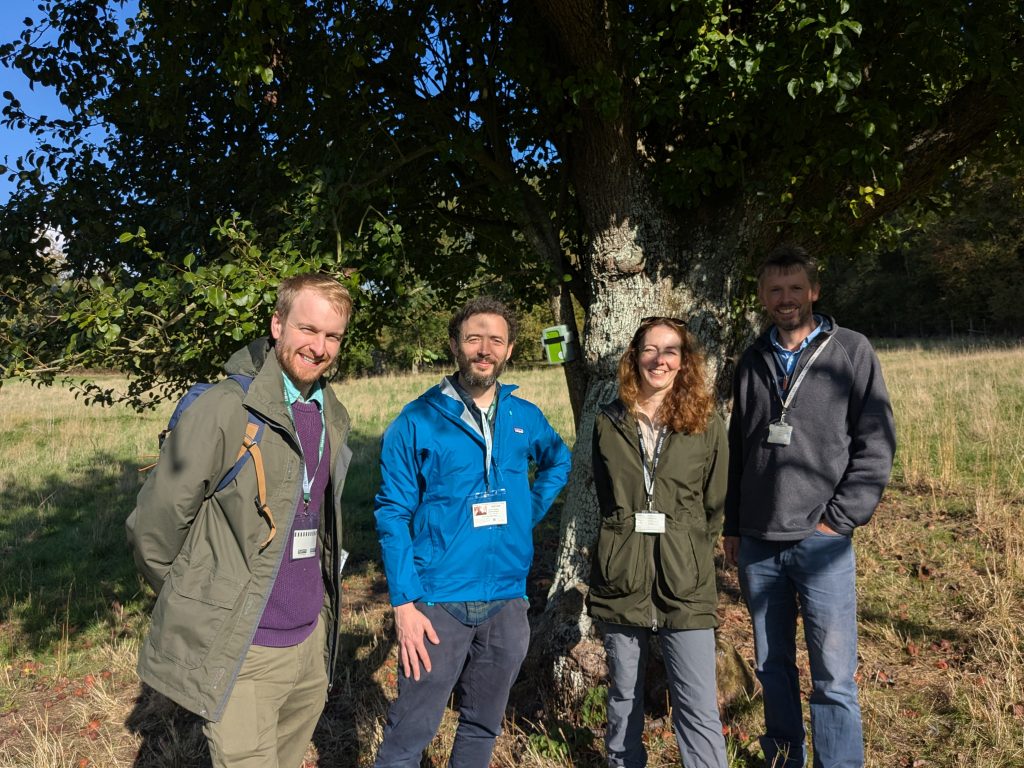
The regular meetings helped us introduce our new technology in a collaborative space and receive their feedback. As the accelerator went by we were able to focus on analysing either existing data or the data from the farm giving us confidence in our new AI.
The simple regularity of the meetings forced us to speed up development times. As with all organisations you can be pulled this way and that as urgent tasks usurp the fun ones. So the regular drumbeat of meetings with agricultural expertise gave us the push to drive our development and testing forward. Therefore by the end of the process we had a body of critiqued evidence that gave us the confidence to release our new AI.
Bird Song/Call AI Overview
We are all well aware of using AI to identify a species through its unique vocalisation, but there is a lot of additional information that could be gleaned from those vocalisations.
As we all know birds use vocalisations to communicate in a myriad of different ways. That may be to attract a mate, mark territory, or locate others in the family group. And for many bird species each communication has its own distinct vocalisation. So by expanding the capability of the AI to assess the type of vocalisation for each species then we can assess how that particular species is using the habitat – and even if it is using the habitat at all.
This additional layer of understanding goes a long way to linking biodiversity assessments (i.e. the variety of species which are present) and habitat assessments – which is the common method for assessing biodiversity.
By way of example the eurasian blackbird (Turdus merula) has several distinct vocalisations, each of which are associated with a different behaviour:
- Song – used in the breeding season to attract a mate and mark territory
- Alarm Call – used to ward off intruders or in response to another blackbird’s call
- Flight Call – used when flying (usually at night)
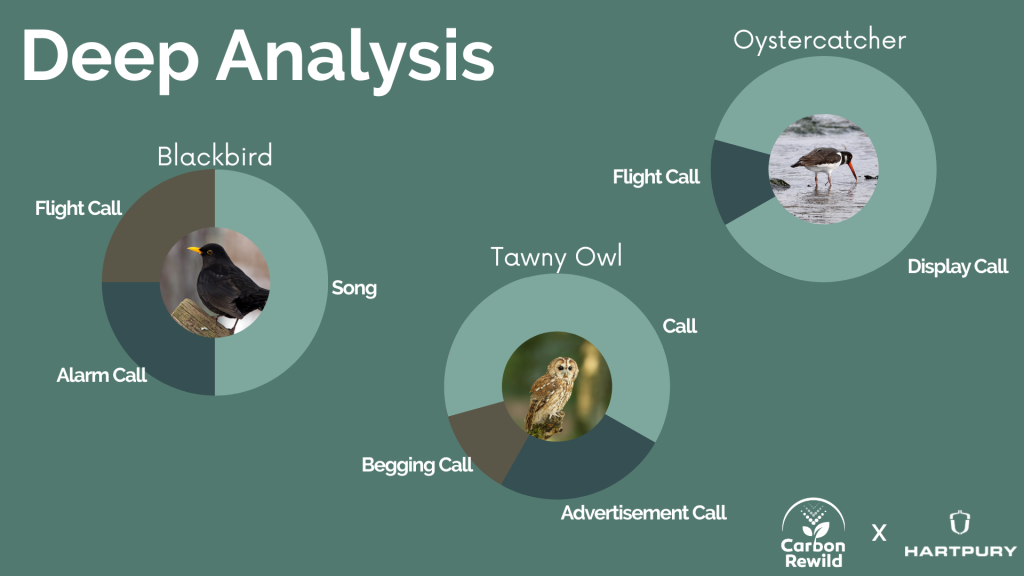
By assessing which vocalisations have been detected gives us an understanding of how the habitat is being used by the blackbird. For instance:
- A high proportion of songs during the breeding season suggests blackbirds are (likely) to breed nearby.
- A high proportion of calls during the breeding season suggests blackbirds are not breeding nearby, but are still using the habitat (e.g. for foraging) as there is competition for territory.
- A high proportion of flight calls suggests blackbirds are only passing through the site.
This last point is quite important. For all the ability to understand the behaviour of breeding species the ability to detect flight calls might be equally important. This is because many existing bioacoustics surveys will include all species detected in the results even if only the flight call has been detected.
Flight calls, as the name suggests, are only made whilst the bird is in flight. Therefore, if only flight calls have been detected there is less chance the bird will be using the habitat. That is not to say they are not using the habitat, as some species may only make flight calls. But there is much less likelihood they are using the habitat. From the data collected at Hartpury we were able to assess which species were likely not using the habitat but just flying over.
Another application for this AI is to show how the behaviour of a species changes throughout the year.
The accelerator programme gave us the time to delve into some research data that we had collected over longer time periods and apply the bird song/call AI to that data. This revealed some very pleasing graphs of the song/call ratio for several species. Below is a graph showing the song/call ratio for the Blue tit (Cyanistes caeruleus) over the course of a year starting in December 2024. The song ratio gradually rises from February to peak in April before falling away by mid-summer. This is not a novel result, in fact it is exactly what we expected. However, the fact that we can automate the processing of this data demonstrates its potential.
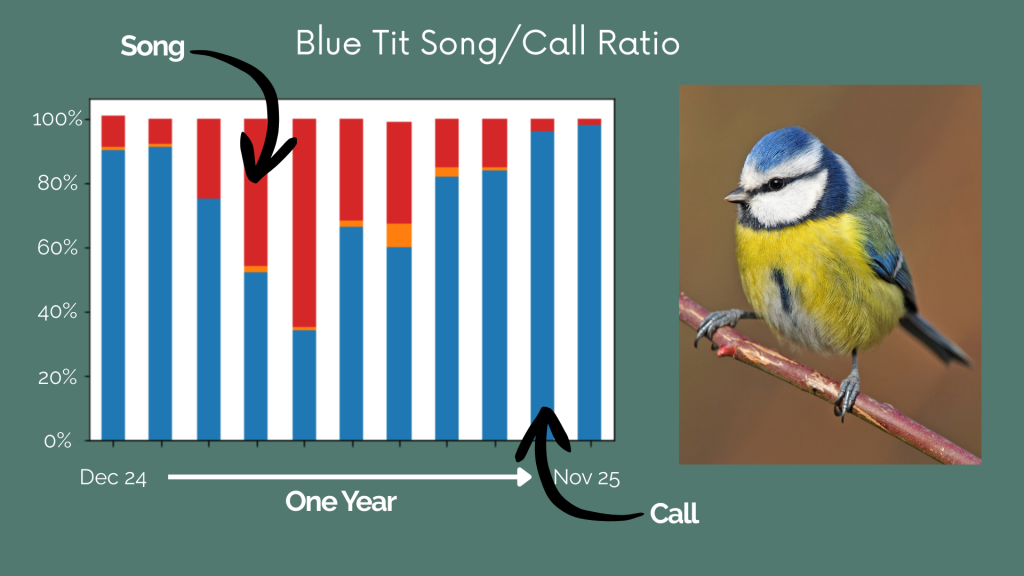
We will be rolling this capability out in 2026, and our customers should be able to make use of this new AI once the first tranches of data come back from the breeding bird surveys in early summer 2026.
Review of the Accelerator
Overall our experience at the BridgeAI High Growth accelerator was very positive. We were lucky to have a project in mind that could be completed within the timeframe and access to the right expertise to get genuinely helpful feedback.
Our advice to anyone applying to any future iteration of this programme (or anything similar) is:
- to approach it with the end in mind. That is, set realistic goals for the programme since a half completed project leaves may loose ends which may take even longer to pick up again in the future;
- critically engage with the other resources provided by the programme. There were plenty of additional webinars and 1:1s, and these helped us to clarify our business goals. Having an hour or two with several business consultants/experts (and being open and honest with them) allowed us to clarify our priorities and exclude things which previously we thought important.
Another benefit of the accelerator has been the new and continuing relationships. On the back of the accelerator we have had many more conversations with a range of different organisations, hopefully enabling us to roll out our new technology and develop it even more.
Finally, we are very grateful for having been selected for the BridgeAI High Growth Accelerator, and would like to thank the BridgeAI team, Innovate UK, and the team at Hartpury.